<?xml version="1.0" encoding="UTF-8"?>
<?xml-stylesheet type="text/xsl" href="/wp-content/themes/feed/atom.xsl"?>
<feed
        xmlns="http://www.w3.org/2005/Atom"
        xmlns:wwe="http://release.wwe.com/atom/1.0"
        xmlns:thr="http://purl.org/syndication/thread/1.0"
        xmlns:taxo="http://purl.org/rss/1.0/modules/taxonomy/"
        xml:lang="en-US"
        xml:base="https://www.freeland-law.com/wp-atom.php"
	>
    <title type="text">Freeland Law APC</title>
    <subtitle type="text">La Mesa California Employment Dispute Attorney &#124; El Cajon County CA Wage &#38; Hour Dispute Lawyer &#124; Mission Valley Labor Law Firm</subtitle>

    <updated>2025-03-31T12:28:24Z</updated>

    <link rel="alternate" type="text/html" href="https://www.freeland-law.com" />
    <id>https://www.freeland-law.com/feed/atom/</id>
    <link rel="self" type="application/atom+xml" href="https://www.freeland-law.com/feed/atom/?forceByPassCache=0.05607675245948285" />
	
	<generator uri="https://wordpress.org/" version="6.9.4">WordPress</generator>
        <entry>
            <author>
									                    <name>On Behalf of Freeland Law APC</name>
				            </author>
            <title type="html"><![CDATA[The Number One Way to Protect Your Business from a Wage Claim]]></title>
            <link rel="alternate" type="text/html" href="https://www.freeland-law.com/blog/2018/07/the-number-one-way-to-protect-your-business-from-a-wage-claim/" />
            <id>https://www.freeland-law.com/?p=46137</id>
            <updated>2020-03-26T16:18:37Z</updated>
            <published>2018-07-22T05:00:00Z</published>
					<taxo:topics><![CDATA[-]]></taxo:topics>
            <summary type="html"><![CDATA[There are many steps business owners should take to protect their companies (and themselves personally) from employment law wage claims. In my book, the number one way to do so is to ensure that the company’s timekeeping practices comply with the law. The State of California requires employers to maintain accurate records of the work hours of non-exempt, hourly employees…]]></summary>
			                <content type="html" xml:base="https://www.freeland-law.com/blog/2018/07/the-number-one-way-to-protect-your-business-from-a-wage-claim/"><![CDATA[<p><img class="mt-image-none" height="282" width="240" src="/wp-content/uploads/sites/1300406/2018/07/Time20clock.jpg" alt="Time clock.jpg"></p> <p>There are many steps business owners should take to protect their companies (and themselves personally) from employment law wage claims. In my book, the number one way to do so is to ensure that the company's timekeeping practices comply with the law.</p> <p>The State of California requires employers to maintain accurate records of the work hours of non-exempt, hourly employees (whether recorded on a paper timesheet, via time clock, time tracking software, or other means.) Such records must reflect the start/end time of the employee's shift, and the start/end time of meal break(s). Employees should verify by signature that the information is accurate and reflects all hours worked for the pay period. These records should ideally be kept for at least four years.</p> <p>Ensuring such good timekeeping practices also shields your company when facing claims of unpaid wages and missed meal breaks. Companies with casual, informal, or inappropriate time tracking are likely to be unprepared and unprotected from a wage and hour claim. An employee who states he worked 10 hours per day, but was routinely only paid for 8 hours, may pursue a claim through the Division of Labor Standards Enforcement (the "DLSE" or the "labor board") or may seek representation by an attorney to pursue such claims in court. An employer who lacks time records documenting actual work hours and meal breaks taken may be unable to defend against such claims and face a substantial judgment for unpaid wages, significant penalties, and attorneys' fees.</p> <p>Protect the interests of your company by ensuring that a proper timekeeping system is in place and consistently utilized. Make sure employees sign their timesheets and affirm the accuracy of the hours recorded. Time spent implementing the system, and following up with staff to ensure they are turning in properly completed timesheets, is a wise investment. Remember that if an employee is not completing timesheets properly or on time, the employer is still obligated to pay the wages owed, but should then counsel the employee and document the performance issue.</p> <p>Laws pertaining to these issues can be complex and confusing. Employers should seek counsel regarding their obligations under the law. <a href="/contact/" data-wpel-link="internal">Contact [nap_names id="FIRM-NAME-1"]</a> for a consultation with Michael Freeland, experienced employment lawyer serving San Diego, La Mesa and El Cajon, California. Michael Freeland has been practicing law for more than 27 years and specializes in employment law matters.</p> <p><i>The information you obtain at this site is not, nor is it intended to be, legal advice. You should consult an attorney for advice regarding your individual situation. We invite you to contact us and welcome your calls, letters and electronic mail. Contacting us does not create an attorney-client relationship. Please do not send any confidential information to us until such time as an attorney-client relationship has been established.</i></p>]]></content>
						        </entry>
	        <entry>
            <author>
									                    <name>On Behalf of Freeland Law APC</name>
				            </author>
            <title type="html"><![CDATA[Can Employers Reduce Exempt Employees&#8217; Salaries for Vacation &#038; Sick Leave Taken?]]></title>
            <link rel="alternate" type="text/html" href="https://www.freeland-law.com/blog/2018/06/can-employers-reduce-exempt-employees-salaries-for-vacation-sick-leave-taken/" />
            <id>https://www.freeland-law.com/?p=46140</id>
            <updated>2020-03-26T16:18:40Z</updated>
            <published>2018-06-10T05:00:00Z</published>
					<taxo:topics><![CDATA[-]]></taxo:topics>
            <summary type="html"><![CDATA[It is easy to get confused regarding what deductions are permissible from exempt (salaried) employees’ pay. While there are numerous applicable rules, today we discuss this issue as it pertains to vacation and sick leave. When considering this issue, it’s important to analyze separately: (1) deductions from an employee’s vacation or sick leave bank, and (2) deductions from an employee’s…]]></summary>
			                <content type="html" xml:base="https://www.freeland-law.com/blog/2018/06/can-employers-reduce-exempt-employees-salaries-for-vacation-sick-leave-taken/"><![CDATA[<p><img class="mt-image-none" height="200" width="300" src="/wp-content/uploads/sites/1300406/2018/06/payroll_deduction-.jpg" alt="payroll_deduction-.jpg"></p> <p>It is easy to get confused regarding what deductions are permissible from exempt (salaried) employees' pay. While there are numerous applicable rules, today we discuss this issue as it pertains to vacation and sick leave.</p> <p>When considering this issue, it's important to analyze separately: (1) deductions from an employee's vacation or sick <strong>leave bank</strong>, and (2) deductions from an employee's <strong>pay.</strong></p> <p><strong>1. Deductions from a Leave Bank </strong></p> <p><b>Full Days</b> - When an exempt employee takes one or more <i>full</i> days of vacation or sick leave, their vacation/sick leave bank should be reduced by that amount.</p> <p><b>Partial Days</b> - Likewise, if an exempt employee takes a <i>partial</i> sick or vacation day, those hours should also be deducted from the leave bank balance.</p> <p>When exempt employees have vacation/sick leave available in their bank, as in the situations above, the usage is noted, and there is no effect on the employee's salary.</p> <p>Note: Deductions from a sick leave bank are only applicable if the employer has an established, "bona fide" plan in place. There are a number of criteria for a bona fide plan, including that the plan must be defined, be communicated to the exempt employees, and be administered impartially.</p> <p><strong>2. Deductions from Pay </strong></p> <p><b>Full Days </b>- When an exempt employee has exhausted all of the vacation/sick leave in his/her bank and does no work on a given <i>full</i> day due to vacation or sickness, a deduction <i>can</i> be made from the exempt employee's <i>salary</i> for that day.</p> <p><b>Partial Days</b> - However, if an exempt employee has exhausted all of the vacation/sick leave in his/her bank and works a <i>partial</i> day and takes the rest of the day off for vacation or sickness, <strong><i>the employee's salary cannot be reduced for that day</i>.</strong></p> <p>Employers should always have detailed policies for vacation and sick leave in place which are communicated to employees, and in particular, all aspects of the recent paid sick leave laws established in the state of California (and in some cases further modified by a particular city) should be followed.</p> <p>The issue of making deductions from exempt employees' wages is a serious one; improper deductions can have many ramifications. Laws pertaining to these issues can be complex and confusing. Employers should seek counsel regarding their obligations under the law. <a href="/contact/" data-wpel-link="internal">Contact [nap_names id="FIRM-NAME-1"]</a> for a consultation with Michael Freeland, experienced employment lawyer serving San Diego, La Mesa and El Cajon, California. Michael Freeland has been practicing law for more than 27 years and specializes in employment law matters.</p> <p><i>The information you obtain at this site is not, nor is it intended to be, legal advice. You should consult an attorney for advice regarding your individual situation. We invite you to contact us and welcome your calls, letters and electronic mail. Contacting us does not create an attorney-client relationship. Please do not send any confidential information to us until such time as an attorney-client relationship has been established.</i></p>]]></content>
						        </entry>
	        <entry>
            <author>
									                    <name>On Behalf of Freeland Law APC</name>
				            </author>
            <title type="html"><![CDATA[Employee or Independent Contractor? Things Just Got a Whole Lot Clearer in California.]]></title>
            <link rel="alternate" type="text/html" href="https://www.freeland-law.com/blog/2018/05/employee-or-independent-contractor-things-just-got-a-whole-lot-clearer-in-california/" />
            <id>https://www.freeland-law.com/?p=46143</id>
            <updated>2020-04-02T14:01:37Z</updated>
            <published>2018-05-26T05:00:00Z</published>
					<taxo:topics><![CDATA[-]]></taxo:topics>
            <summary type="html"><![CDATA[Employers frequently struggle with the question of whether a worker is an employee or an independent contractor. Companies in California now have much clearer guidance with the recent California Supreme Court decision in Dynamex Operations West, Inc. v. Superior Court of Los Angeles (Dynamex). Through this decision, the Supreme Court has now adopted the “ABC” standard. This new standard is…]]></summary>
			                <content type="html" xml:base="https://www.freeland-law.com/blog/2018/05/employee-or-independent-contractor-things-just-got-a-whole-lot-clearer-in-california/"><![CDATA[<img class="mt-image-none" src="/wp-content/uploads/sites/1300406/2018/05/independent20contractor20or20employee.png" alt="independent contractor or employee.png" width="300" height="171" />

Employers frequently struggle with the question of whether a worker is an employee or an independent contractor. Companies in California now have much clearer guidance with the recent California Supreme Court decision in <i>Dynamex Operations West, Inc. v. Superior Court of Los Angeles</i> (Dynamex).

Through this decision, the Supreme Court has now adopted the "ABC" standard. This new standard is stricter than the one previously used, and makes classifying someone as an independent contractor riskier than before.

This ruling states that <i>workers are employees</i> unless the employer can prove the worker passes <i>ALL</i> of the elements of the ABC test.

<strong>A</strong> - The employer cannot control and direct the worker, either as stated in a contract <i>or</i> in reality. The employer cannot try to control how, when and where the worker must do the job in an "independent contractor agreement," scope of work agreement, or other contract. And even absent such wording in writing, if the reality is that the worker is told to show up on the job site per a set schedule and then told exactly what to do and how to do it, this test will not be passed.

<strong>B</strong> - The worker must not be performing work or services that the company customarily provides. For example, a painter hired by an architecture firm to paint its offices will pass. A draftsman hired to come in to help meet a big project deadline likely won't. Employers should not routinely classify a worker as an independent contractor just because he or she works on a project basis or temporary basis. The length of time employed does not affect the decision of employee vs. independent contractor. Likewise, the fact that a worker performs services off-site, from home for example, doesn't make him or her any less of an employee if he or she is performing tasks included in the usual course of the company's business.

<strong>C</strong> - The worker must have a clearly established business of his/her own, as evidenced by advertising, incorporation or a filed dba, a business license, etc. and the individual must routinely offer services to the general public, multiple clients, not exist just to provide services for one business entity.

There are real risks to classifying true employees as independent contractors. For example, a company may be find itself facing claims of unpaid overtime; wage statement, missed meal and rest break, payroll tax, and other penalties; and costly litigation and attorneys fees.

Employers would do well to evaluate any workers currently being paid on a Form-1099 basis and/or as an independent contractor. Do they pass each test? If not, consider shifting their duties to an existing employee, or protect your company by converting them to a proper employee.

These are pretty high standards, but they are clear. The <i>Dynamex</i> decision will make it easier for employers to prove they are classifying a worker properly if they are following the law. But employers trying to game the system by hiring "independent contractors" instead of employees are vulnerable in light of this new decision.

Laws pertaining to these issues can be complex and confusing. Employers should seek counsel regarding their obligations under the law. <a href="/contact/" data-wpel-link="internal">Contact [nap_names id="FIRM-NAME-1"]</a> for a consultation with Michael Freeland, experienced employment lawyer serving San Diego, La Mesa and El Cajon, California. Michael Freeland has been practicing law for more than 27 years and specializes in employment law matters.

<i>The information you obtain at this site is not, nor is it intended to be, legal advice. You should consult an attorney for advice regarding your individual situation. We invite you to contact us and welcome your calls, letters and electronic mail. Contacting us does not create an attorney-client relationship. Please do not send any confidential information to us until such time as an attorney-client relationship has been established.</i>]]></content>
						        </entry>
	        <entry>
            <author>
									                    <name>On Behalf of Freeland Law APC</name>
				            </author>
            <title type="html"><![CDATA[Severance Agreements: A Win-Win Situation]]></title>
            <link rel="alternate" type="text/html" href="https://www.freeland-law.com/blog/2018/04/severance-agreements-a-win-win-situation/" />
            <id>https://www.freeland-law.com/?p=46146</id>
            <updated>2020-03-26T16:18:47Z</updated>
            <published>2018-04-30T05:00:00Z</published>
					<taxo:topics><![CDATA[-]]></taxo:topics>
            <summary type="html"><![CDATA[  When an employer or employee finally concludes that the employment relationship must end, both sides should consider a key opportunity – negotiating a severance agreement. Why? When an employer-employee relationship ends on less than amicable terms or where there is already a potential dispute, such agreements can help both sides avoid going down a road of lengthy litigation and…]]></summary>
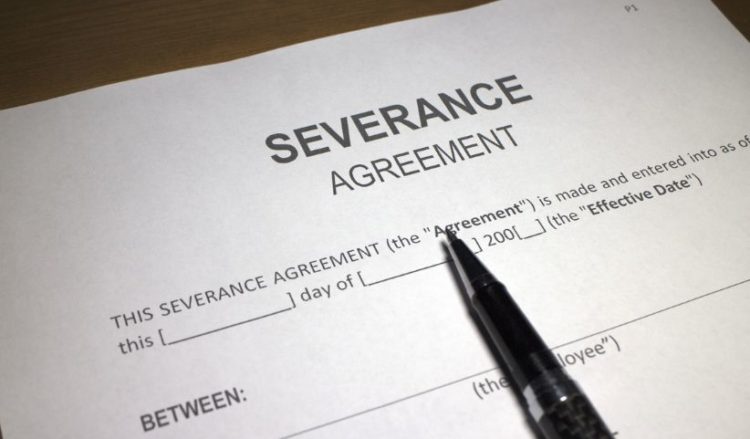
			                <content type="html" xml:base="https://www.freeland-law.com/blog/2018/04/severance-agreements-a-win-win-situation/"><![CDATA[<p><img class="mt-image-none" height="439" width="750" src="/wp-content/uploads/sites/1300406/2018/04/Severance-750x439-1.jpg" alt="Severance-750x439.jpg">&nbsp;</p> <p>When an employer or employee finally concludes that the employment relationship must end, both sides should consider a key opportunity - negotiating a severance agreement. Why? When an employer-employee relationship ends on less than amicable terms or where there is already a potential dispute, such agreements can help both sides avoid going down a road of lengthy litigation and legal costs. When crafted properly, severance agreements benefit <i>both</i> sides. Here are some reasons why:</p> <p><strong>Entitlement to Additional Rights and Benefits not Afforded in the Courts</strong></p> <p>Well-crafted severance agreements promote achieving what each party desires by allowing creative solutions. The severance agreement provides an opportunity and forum in which both sides can request terms beneficial to their side, such as letters of recommendation, extended medical benefits, an agreement not to fight unemployment benefits, releases of potential claims, etc.</p> <p>Going the lawsuit route could result in an award of money damages - but rarely more than that. Severance agreements offer the parties rights <i>beyond</i> what the courts will typically award. For example, a mutual release of all claims can be achieved - allowing both sides to walk away from the dispute with greater confidence that they will not need to battle again. The parties can also agree not to disparage each other in the future to avoid worries about lasting grudges.</p> <p><strong>Avoiding Uncertainty</strong></p> <p>Severance agreements provide certainty, allowing the employer and employee to mitigate the risks that are inherent to litigation, and provide the employee extra compensation to which he/she may not otherwise be entitled.</p> <p>When an employment relationship ends, it may be unclear whether a legal right was violated or not.&nbsp; An employee may feel that the termination was unlawful. What were the facts on the employer's end? What really motivated the employer to take the adverse action? Until a lawsuit is filed and discovery occurs (the process in which both sides submit and answer questions and provide documents), both parties will likely not know the whole story.</p> <p>Justice is rarely swift. The more time spent in litigation, the greater possible risk that new information/evidence may be revealed which changes your legal position.&nbsp; A new document may be uncovered, a new witness may come forward, or a key witness disappears.</p> <p>For more information about severance agreements, <a href="/contact/" data-wpel-link="internal">contact [nap_names id="FIRM-NAME-1"]</a> for a consultation with Michael Freeland, experienced employment lawyer serving San Diego, La Mesa and El Cajon, California. Michael Freeland has been practicing law for more than 27 years and specializes in employment law matters.</p> <p><i>The information you obtain at this site is not, nor is it intended to be, legal advice. You should consult an attorney for advice regarding your individual situation. We invite you to contact us and welcome your calls, letters and electronic mail. Contacting us does not create an attorney-client relationship. Please do not send any confidential information to us until such time as an attorney-client relationship has been established.</i></p>]]></content>
						        </entry>
	        <entry>
            <author>
									                    <name>On Behalf of Freeland Law APC</name>
				            </author>
            <title type="html"><![CDATA[Control Overtime &#8211; Don&#8217;t Let It Control You]]></title>
            <link rel="alternate" type="text/html" href="https://www.freeland-law.com/blog/2018/03/control-overtime-dont-let-it-control-you/" />
            <id>https://www.freeland-law.com/?p=46485</id>
            <updated>2020-03-30T15:02:40Z</updated>
            <published>2018-03-26T05:00:00Z</published>
					<taxo:topics><![CDATA[-]]></taxo:topics>
            <summary type="html"><![CDATA[Employers spend countless hours worrying about, and in some cases, trying to ignore, overtime hours worked by their employees. Don’t hide from the overtime issue; instead, take charge of it through effective planning and management. 1) Know the law! It’s surprising how many employers do not. In the state of California, generally, employees who work more than 8 hours in…]]></summary>
			                <content type="html" xml:base="https://www.freeland-law.com/blog/2018/03/control-overtime-dont-let-it-control-you/"><![CDATA[<p><img class="mt-image-none" height="1080" width="1920" src="/wp-content/uploads/sites/1300406/2018/03/Overtime201.png" alt="Overtime 1.png"></p> <p>Employers spend countless hours worrying about, and in some cases, trying to ignore, overtime hours worked by their employees. Don't hide from the overtime issue; instead, take charge of it through effective planning and management.</p> <p><strong>1) Know the <a target="_blank" href="https://www.dir.ca.gov/dlse/faq_overtime.htm" rel="noopener noreferrer" data-wpel-link="external">law</a>!</strong> It's surprising how many employers do not. In the state of California, generally, employees who work more than 8 hours in a day or more than 40 hours in a week are entitled to be paid overtime. Employees working more than 12 hours in a day, or more than 8 hours on their seventh consecutive day worked, are entitled to double-time pay.</p> <p><strong>2)</strong> <strong>Don't Fear Overtime.</strong> Some employers demonize overtime, creating an atmosphere in which it is strictly not allowed. In reality, overtime work may occasionally be needed. Allowing a staff member to work overtime, and paying him/her properly for it, can be the most cost-efficient means of getting the work done sometimes. Don't make your employees afraid to report that they've worked overtime. Workers may not write it down on their timecard out of fear of discipline, then later file a wage claim for those unpaid hours.</p> <p><strong>3) Make your policy known.</strong> Employers should include an overtime work policy in their employee handbook. Most companies require employees to advise their supervisor in advance of the need to work overtime to seek his/her approval. Be sure to also require employees to document <strong><i>all</i></strong> hours worked on a regular basis.</p> <p><strong>4) Document it.</strong> Be sure that you can prove that overtime hours were properly tracked, calculated and paid. This is your best defense against future unpaid wage claims. Ensure that your timekeeping system provides a method to track overtime, and that your employees certify every pay period that they recorded all time worked. Don't ignore the issue - if you are aware that overtime is being worked but not tracked and paid, pull your head out of the sand and make sure your staff starts recording it. Then see #5.</p> <p><strong>5) Manage it. </strong> If you have workers who accidentally slip into overtime work, or even intentionally do so on a regular basis, remember that you still must pay for the hours already worked at the overtime rate. This is a performance problem. Your recourse is to then manage their performance. Counsel offenders verbally and in writing as to their violation of your policy. At the same time, evaluate the reasons that overtime work is being used. Do you need to adjust shifts? Hire additional staff? Better train existing staff to improve performance and efficiency?</p> <p>Protect your bottom line from expensive, unplanned overtime and your business from costly claims of unpaid wages by ensuring overtime is properly and proactively managed. Then get a good night's sleep.</p> <p>Laws pertaining to these issues can be complex and confusing. Employers should seek counsel regarding the extent of their obligations under the law. <a href="/contact/" data-wpel-link="internal">Contact [nap_names id="FIRM-NAME-1"]</a> for a consultation with Michael Freeland, experienced employment lawyer serving San Diego, La Mesa and El Cajon, California. Michael Freeland has been practicing law for more than 27 years and specializes in employment law matters.</p> <p><i>The information you obtain at this site is not, nor is it intended to be, legal advice. You should consult an attorney for advice regarding your individual situation. We invite you to contact us and welcome your calls, letters and electronic mail. Contacting us does not create an attorney-client relationship. Please do not send any confidential information to us until such time as an attorney-client relationship has been established.</i></p>]]></content>
						        </entry>
	        <entry>
            <author>
									                    <name>On Behalf of Freeland Law APC</name>
				            </author>
            <title type="html"><![CDATA[Anti-Discrimination News &#8211; Applicants Have New Protection Under 2018 &#8220;Ban the Box&#8221; Law]]></title>
            <link rel="alternate" type="text/html" href="https://www.freeland-law.com/blog/2018/03/anti-discrimination-news-applicants-have-new-protection-under-2018-ban-the-box-law/" />
            <id>https://www.freeland-law.com/?p=46152</id>
            <updated>2020-03-26T16:18:54Z</updated>
            <published>2018-03-18T05:00:00Z</published>
					<taxo:topics><![CDATA[-]]></taxo:topics>
            <summary type="html"><![CDATA[Under the new “Ban the Box” law, California employers are no longer allowed to ask applicants about their prior criminal history before making a conditional offer of employment, in most circumstances. If you are a company with 5 or more employees, this new law requires that you update the employment application you use to ensure it does not inquire about…]]></summary>
			                <content type="html" xml:base="https://www.freeland-law.com/blog/2018/03/anti-discrimination-news-applicants-have-new-protection-under-2018-ban-the-box-law/"><![CDATA[<p><img class="mt-image-none" height="250" width="566" src="/wp-content/uploads/sites/1300406/2018/03/Criminal20History.jpg" alt="Criminal History.jpg"></p> <p>Under the new "Ban the Box" law, California employers are no longer allowed to ask applicants about their prior criminal history before making a conditional offer of employment, in most circumstances.</p> <p style="text-align: justify;">If you are a company with 5 or more employees, this <a target="_blank" href="https://leginfo.legislature.ca.gov/faces/codes_displaySection.xhtml?sectionNum=12952.&amp;lawCode=GOV" rel="noopener noreferrer" data-wpel-link="external">new law</a> requires that you update the employment application you use to ensure it does not inquire about criminal convictions, as well as update the procedures you follow when considering potential criminal conviction history in employment decisions. This law does not apply to employers who must comply with state, local or federal requirements for criminal background checks for their employees.</p> <p style="text-align: justify;">Once a conditional offer of employment has been made, an employer may, following the legal requirements and when appropriate, run a criminal background check on an applicant and/or inquire about any criminal conviction history.</p> <p style="text-align: justify;">If an employer is considering denying employment to an applicant to whom a conditional offer has been given, the company must engage in a "fair chance" process, described in this new law. The employer must undertake an "individual assessment" of the facts of the situation, considering the nature of the criminal offense, whether the offense has bearing on the specific job the applicant has applied for, and how long ago the offense occurred.</p> <p style="text-align: justify;">If the decision is made to rescind the offer of employment, employers must follow a series of steps which include an initial written notice to the applicant which contains certain information, allowing for a response from the applicant, and then written notice to the applicant of the final decision.</p> <p style="text-align: justify;">Employers must also comply with other rules regarding the type of criminal history that may be taken into account with regard to employment decisions, and employers must always be in compliance with provisions within the FCRA, Fair Credit Reporting Act.</p> <p style="text-align: justify;">Laws pertaining to these issues can be complex and confusing. Employers should seek counsel regarding the extent of their obligations under the law. <a href="/contact/" data-wpel-link="internal">Contact [nap_names id="FIRM-NAME-1"]</a> for a consultation with Michael Freeland, experienced employment lawyer serving San Diego, California. Michael Freeland has been practicing law for more than 27 years and specializes in employment law matters.</p> <p style="text-align: justify;"><i>The information you obtain at this site is not, nor is it intended to be, legal advice. You should consult an attorney for advice regarding your individual situation. We invite you to contact us and welcome your calls, letters and electronic mail. Contacting us does not create an attorney-client relationship. Please do not send any confidential information to us until such time as an attorney-client relationship has been established.</i></p>]]></content>
						        </entry>
	        <entry>
            <author>
									                    <name>On Behalf of Freeland Law APC</name>
				            </author>
            <title type="html"><![CDATA[Protected Leaves of Absence &#8211; New Parent Leave Law Now in Effect]]></title>
            <link rel="alternate" type="text/html" href="https://www.freeland-law.com/blog/2018/03/protected-leaves-of-absence-new-parent-leave-law-now-in-effect/" />
            <id>https://www.freeland-law.com/?p=46149</id>
            <updated>2020-03-26T16:18:50Z</updated>
            <published>2018-03-09T06:00:00Z</published>
					<taxo:topics><![CDATA[-]]></taxo:topics>
            <summary type="html"><![CDATA[The State of California has expanded protected parental leave eligibility to employees of qualified companies with 20 to 49 employees. Effective January 1, 2018, the “New Parent Leave Act” provides up to 12 months of protected leave for eligible employees to bond with a new child. Under SB 63, employees at smaller companies can now take New Parent Leave to…]]></summary>
			                <content type="html" xml:base="https://www.freeland-law.com/blog/2018/03/protected-leaves-of-absence-new-parent-leave-law-now-in-effect/"><![CDATA[<p><img class="mt-image-none" height="405" width="670" src="/wp-content/uploads/sites/1300406/2018/03/new-parents.jpg" alt="new-parents.jpg"></p> <p>The State of California has expanded protected parental leave eligibility to employees of qualified companies with 20 to 49 employees. Effective January 1, 2018, the "New Parent Leave Act" provides up to 12 months of protected leave for eligible employees to bond with a new child.</p> <p style="text-align: justify;">Under <a target="_blank" href="https://leginfo.legislature.ca.gov/faces/billTextClient.xhtml?bill_id=201720180SB63" rel="noopener noreferrer" data-wpel-link="external">SB 63</a>, employees at smaller companies can now take New Parent Leave to spend time with their new child within one year of the child's birth, adoption of a child, or placement of a foster child. Previously, only companies with 50+ employees were required to provide baby bonding leave of this type. Now, employers with 20 to 49 employers are also required to offer protected leave.</p> <p style="text-align: justify;">Employees are eligible for New Parent Leave if they have worked for the employer for at least 12 months, have worked at least 1250 hours in the past 12 months and work at a worksite with at least 20 employees within a 75-mile radius. This law does not apply to employees to whom FMLA or CFRA already applies.</p> <p style="text-align: justify;">When an employee returns from Parental Leave, employers must reinstate the employee to the same or comparable position. Notice must be give to an employee prior to their going out on New Parent Leave that they will be reinstated to the same or comparable position at the conclusion of their leave.</p> <p style="text-align: justify;">Additional regulations pertaining to the New Parent Leave Act will be coming out soon from the <a target="_blank" href="https://www.dfeh.ca.gov/fehcouncil/" rel="noopener noreferrer" data-wpel-link="external">California Fair Employment &amp; Housing Council</a> and employers and employees should check their website regularly.</p> <p style="text-align: justify;">Laws pertaining to these issues can be complex and confusing. Employers should seek counsel regarding the extent of their obligations under the law. <a href="/contact/" data-wpel-link="internal">Contact [nap_names id="FIRM-NAME-1"]</a> for a consultation with Michael Freeland, experienced employment lawyer serving San Diego, California. Michael Freeland has been practicing law for more than 27 years and specializes in employment law matters.</p> <p style="text-align: justify;"><i>The information you obtain at this site is not, nor is it intended to be, legal advice. You should consult an attorney for advice regarding your individual situation. We invite you to contact us and welcome your calls, letters and electronic mail. Contacting us does not create an attorney-client relationship. Please do not send any confidential information to us until such time as an attorney-client relationship has been established.</i></p>]]></content>
						        </entry>
	        <entry>
            <author>
									                    <name>On Behalf of Freeland Law APC</name>
				            </author>
            <title type="html"><![CDATA[California Labor Law &#8211; Is Your Rest Break Policy Up to Date?]]></title>
            <link rel="alternate" type="text/html" href="https://www.freeland-law.com/blog/2018/02/california-labor-law-is-your-rest-break-policy-up-to-date/" />
            <id>https://www.freeland-law.com/?p=46155</id>
            <updated>2020-03-26T16:18:57Z</updated>
            <published>2018-02-02T06:00:00Z</published>
					<taxo:topics><![CDATA[-]]></taxo:topics>
            <summary type="html"><![CDATA[Many California employers may not be aware that the law regarding rest breaks for employees has changed. Employees are no longer required to remain on premises during rest breaks, the breaks cannot be interrupted, and employees can’t be “on-call” during rest breaks. Generally, employees working between 3.5 and 6 hours are entitled to one 10-minute rest break, with two 10-minute…]]></summary>
			                <content type="html" xml:base="https://www.freeland-law.com/blog/2018/02/california-labor-law-is-your-rest-break-policy-up-to-date/"><![CDATA[<p><img alt="Rest Break 2.jpg" src="/wp-content/uploads/sites/1300406/2018/02/Rest20Break202.jpg" width="234" height="129" class="mt-image-none"></p> <p>Many California employers may not be aware that the <a href="https://www.dir.ca.gov/dlse/FAQ_RestPeriods.htm" data-wpel-link="external" target="_blank" rel="noopener noreferrer">law</a> regarding rest breaks for employees has changed. Employees are no longer required to remain on premises during rest breaks, the breaks cannot be interrupted, and employees can't be "on-call" during rest breaks.</p> <p>Generally, employees working between 3.5 and 6 hours are entitled to one 10-minute rest break, with two 10-minute rest breaks for shifts of 6 - 8 hours. Employees working fewer than 3.5 hours are not entitled to a paid rest break. What's key is ensuring that employees are completely relieved of work during these rest breaks, and can choose to do whatever they like during the break. This includes leaving the workplace, as long as they return to their work station prior to the end of the rest break. Additionally, workers cannot be expected to be "on call" during a rest break or expected to answer their cell phone, as this means they are not fully relieved of their duties.</p> <p>Laws pertaining to these issues can be complex and confusing. <a href="/contact/" data-wpel-link="internal">Contact [nap_names id="FIRM-NAME-1"]</a> for a consultation with Michael Freeland, experienced employment lawyer serving San Diego, California. Michael Freeland has been practicing law for more than 27 years and specializes in employment law matters.</p> <p><i>The information you obtain at this site is not, nor is it intended to be, legal advice. You should consult an attorney for advice regarding your individual situation. We invite you to contact us and welcome your calls, letters and electronic mail. Contacting us does not create an attorney-client relationship. Please do not send any confidential information to us until such time as an attorney-client relationship has been established.</i></p>]]></content>
						        </entry>
	        <entry>
            <author>
									                    <name>On Behalf of Freeland Law APC</name>
				            </author>
            <title type="html"><![CDATA[UPDATE: JULY 17, 2017 VERSION OF I-9 NOW REQUIRED]]></title>
            <link rel="alternate" type="text/html" href="https://www.freeland-law.com/blog/2017/09/update-july-17-2017-version-of-i-9-now-required/" />
            <id>https://www.freeland-law.com/?p=46158</id>
            <updated>2020-03-26T16:19:01Z</updated>
            <published>2017-09-08T05:00:00Z</published>
					<taxo:topics><![CDATA[-]]></taxo:topics>
            <summary type="html"><![CDATA[On July 17, 2017, the latest version of the Form I-9 Employment Eligibility Verification form was released by the USCIS (U.S. Citizenship and Immigration Services.) Employers are required to use this revised form as of September 18, 2017. The new form is dated “07/17/17” in the lower left hand corner of its pages. This form is currently designated for use…]]></summary>
			                <content type="html" xml:base="https://www.freeland-law.com/blog/2017/09/update-july-17-2017-version-of-i-9-now-required/"><![CDATA[<p><img class="mt-image-none" height="225" width="225" src="/wp-content/uploads/sites/1300406/2017/09/Updated.jpg" alt="Updated.jpg"></p> <p>On July 17, 2017, the latest version of the Form I-9 Employment Eligibility Verification form was released by the USCIS (U.S. Citizenship and Immigration Services.) Employers are required to use this revised form as of <strong><i>September 18, 2017</i></strong>. The new form is dated "07/17/17" in the lower left hand corner of its pages. This form is currently designated for use through August 31, 2019.</p> <p>The <a target="_blank" href="https://www.uscis.gov/system/files_force/files/form/i-9-paper-version.pdf" rel="noopener noreferrer" data-wpel-link="external">Form I-9</a> is an important and required hiring document that all employers must use. Staff involved in management and human resources matters within your firm should be familiar with the rules governing both the form and the process. Employers are required to use the Form I-9 to verify the employment eligibility of their employees upon hire. Employers may not require individuals to complete a Form I-9 until the employee has accepted the job offer. Part A, on the first page of the form, must be completed by the new employee by the end of the first day of employment. Employers must complete Part B of the I-9 within three business days of the employee's first day of employment.</p> <p>Employees must provide, and employers examine, eligible forms of identification (listed on page three of the form) proving their identity and their eligibility to be employed in this country. Employees are able to choose what documents they provide, as long as they are unexpired and fit the requirements as listed on Part B of the Form I-9. Employers can accept documents that appear to be genuine, that relate to the employee providing them, and as long as they have no information that would indicate the documents are fraudulent. The I-9's should be kept separately from employees' personnel files, and retained as appropriate per the Form-I-9 instructions.</p> <p>The USCIS has provided in a separate document complete <a target="_blank" href="https://www.uscis.gov/system/files_force/files/form/i-9instr.pdf" rel="noopener noreferrer" data-wpel-link="external">instructions</a> relating to the Form I-9.</p> <p>Laws pertaining to required documents at time of hire can be complex and confusing. <a href="/contact/" data-wpel-link="internal">Contact [nap_names id="FIRM-NAME-1"]</a> for a consultation with Michael Freeland, experienced employment lawyer serving San Diego, California. Michael Freeland has been practicing law for 25 years and specializes in employment law matters.</p> <p><i>The information you obtain at this site is not, nor is it intended to be, legal advice. You should consult an attorney for advice regarding your individual situation. We invite you to contact us and welcome your calls, letters and electronic mail. Contacting us does not create an attorney-client relationship. Please do not send any confidential information to us until such time as an attorney-client relationship has been established.</i></p>]]></content>
						        </entry>
	        <entry>
            <author>
									                    <name>On Behalf of Freeland Law APC</name>
				            </author>
            <title type="html"><![CDATA[New Version of Form I-9 Verifying Employment Eligibility Now Required]]></title>
            <link rel="alternate" type="text/html" href="https://www.freeland-law.com/blog/2017/01/new-version-of-form-i-9-verifying-employment-eligibility-now-required/" />
            <id>https://www.freeland-law.com/?p=46161</id>
            <updated>2020-03-26T16:19:04Z</updated>
            <published>2017-01-27T06:00:00Z</published>
					<taxo:topics><![CDATA[-]]></taxo:topics>
            <summary type="html"><![CDATA[An updated version of the Form I-9, Employment Eligibility Verification form, has been released by the USCIS (the United Stated Citizenship & Immigration Services) and must be the only form in use by employers effective January 22, 2017. The Form I-9 is an important and required hiring document that all employers must use. Staff involved in management and human resources…]]></summary>
			                <content type="html" xml:base="https://www.freeland-law.com/blog/2017/01/new-version-of-form-i-9-verifying-employment-eligibility-now-required/"><![CDATA[<p><img class="mt-image-none" height="143" width="336" src="/wp-content/uploads/sites/1300406/2017/01/I20920employment_verification_3.jpg" alt="I 9 employment_verification_3.jpg"></p> <p>An updated version of the Form I-9, Employment Eligibility Verification form, has been released by the USCIS (the United Stated Citizenship &amp; Immigration Services) and must be the only form in use by employers effective January 22, 2017.</p> <p>The Form I-9 is an important and required hiring document that all employers must use. Staff involved in management and human resources matters within your firm should be familiar with the rules governing both the form and the process. Employers are required to use the <a target="_blank" href="https://www.uscis.gov/system/files_force/files/form/i-9-paper-version.pdf" rel="noopener noreferrer" data-wpel-link="external">Form I-9</a> to verify the employment eligibility of their employees upon hire. Employers may not require individuals to complete a Form I-9 until the employee has accepted a job offer. Part A, on the first page of the form, must be completed by the new employee by the end of the first day of employment. Employers must complete Part B of the I-9 within three business days of the employee's first day of employment.&nbsp;</p> <p>Employees must provide, and employers examine, eligible forms of identification (listed on page three of the form) proving their identity and their eligibility to be employed in this country. Employees are able to choose what documents they provide, as long as they are unexpired and fit the requirements as listed on Part B of the Form I-9. Employers can accept documents that appear to be genuine, that relate to the employee providing them, and as long as they have no information that would indicate the documents are fraudulent. The I-9's should be kept separately from employees' personnel files, and retained as appropriate per the Form-I-9 instructions.</p> <p>The USCIS has provided a separate document with complete <a target="_blank" href="https://www.uscis.gov/system/files_force/files/form/i-9instr.pdf" rel="noopener noreferrer" data-wpel-link="external">instructions</a> relating to the Form I-9.</p> <p>Laws pertaining to required documents at time of hire can be complex and confusing. <a href="/contact/" data-wpel-link="internal">Contact [nap_names id="FIRM-NAME-1"]</a> for a consultation with Michael Freeland, experienced employment lawyer serving San Diego, California. Michael Freeland has been practicing law for 25 years and specializes in employment law matters.</p> <p><i>The information you obtain at this site is not, nor is it intended to be, legal advice. You should consult an attorney for advice regarding your individual situation. We invite you to contact us and welcome your calls, letters and electronic mail. Contacting us does not create an attorney-client relationship. Please do not send any confidential information to us until such time as an attorney-client relationship has been established.</i></p>]]></content>
						        </entry>
	</feed>